How to Boost Revenue by 25% with Just ONE Ad
Regardless of what industry you're in, understanding the "why" behind the buy is the key to growth.
Nov 7, 2024
Uncover the psychology behind successful advertising with this real-world case study! Learn how understanding the 'why' behind the buy can drive growth, boost revenue, and create powerful, targeted ads. Discover research-backed techniques to engage consumers at every step of their journey, from Trigger Events to Purchase, for year-round results.
How to Boost Revenue by 25% With Just ONE Ad
No matter what industry you’re in, growth comes down to one thing:
Understanding why people buy.
It’s been a minute 🫣
I’ve been completely MIA the past couple of weeks (this month has been chaos), but I’m back, and I wanted to share something a little different than usual.
If you’ve been around here for a while, you already know this about me:
I’m a full-on consumer psychology fanatic 😅
Reading peer-reviewed studies is basically a personality trait at this point. But nothing compares to watching psychology-based advertising work in the real world.
What follows is a real case study that shows how a deep understanding of consumer psychology led to a 25% revenue increase during one of the most important advertising seasons of the year for a brand that already “had everything going for it.”
The Challenge: Finding the “Why”
Last year, I worked with Original Grain, a luxury watch brand known for rugged watches made from reclaimed whiskey-barrel wood.
They had a solid foundation:
A unique, high-quality product
Strong brand perception and presentation
A compelling USP in a fast-growing category
What they didn’t have was clarity around why customers were buying, and what message would make them buy more.
And this is my favorite problem to solve.
“Why do people buy?” goes way beyond tactics, platforms, or metrics.
It forces us to look at:
How people make decisions
Who they’re making them for
What emotional problem they’re really trying to solve
At the end of the day, everything comes back to why.
The Winning Message (And How We Found It)
🔬 STEP ONE: Research
Before touching creative, I needed to understand what customers were experiencing outside the brand.
So I dug in using:
Google Trends – to see where the industry was headed
Google Keyword Planner – to gauge high-intent demand
Answer the Public – to understand education level and questions
Pinterest Trends – to spot visual trends for ads
TikTok for Business – to identify emerging video formats
(This isn’t my entire stack, but it’s the core.)
This gave us market direction, but not emotion yet.
💡 STEP TWO: NLP Analysis
Next, I ran a Natural Language Processing (NLP) analysis on customer reviews.
NLP is a machine learning approach that interprets human language. The process I use categorizes reviews into 9 emotional categories, allowing us to identify which emotions are most likely to drive future purchases.
This analysis revealed:
The top 3 pre-purchase emotions referenced by customers
Self-adopted terms (how customers described themselves)
Core storylines around who, what, when, where, and why the product mattered
Reviews are a gold mine.
Not just for testimonialsbu, t for customer psychology, journey milestones, and emotional motivation.
And this is where things clicked.
The Insight That Changed Everything
Original Grain had two clear customer subgroups:
A self-purchasing audience
A gifting audience
The self-purchasers mattered, but the gifting audience had:
Higher AOV
Higher LTV
A much stronger emotional driver
Here’s what the NLP revealed:
❌ Gifters didn’t want another generic present.
✅ They wanted to show the recipient that they were seen.
They wanted to communicate:
Respect
Acknowledgment
Appreciation of the recipient’s individual value as a person
That was the “why.”
🧪 STEP THREE: Testing
With this insight, we built 10 new ads, all rooted in the three core emotional motivators uncovered through research and NLP analysis.
I typically separate emotionally distinct ads into their own testing structures (for example: one set for Esteem, one for Nurturance, etc.). This makes it easier to identify which emotions deserve further iteration.
This test ran during Father’s Day, about six weeks total.
💰 STEP FOUR: Results
The results were wild 🤯
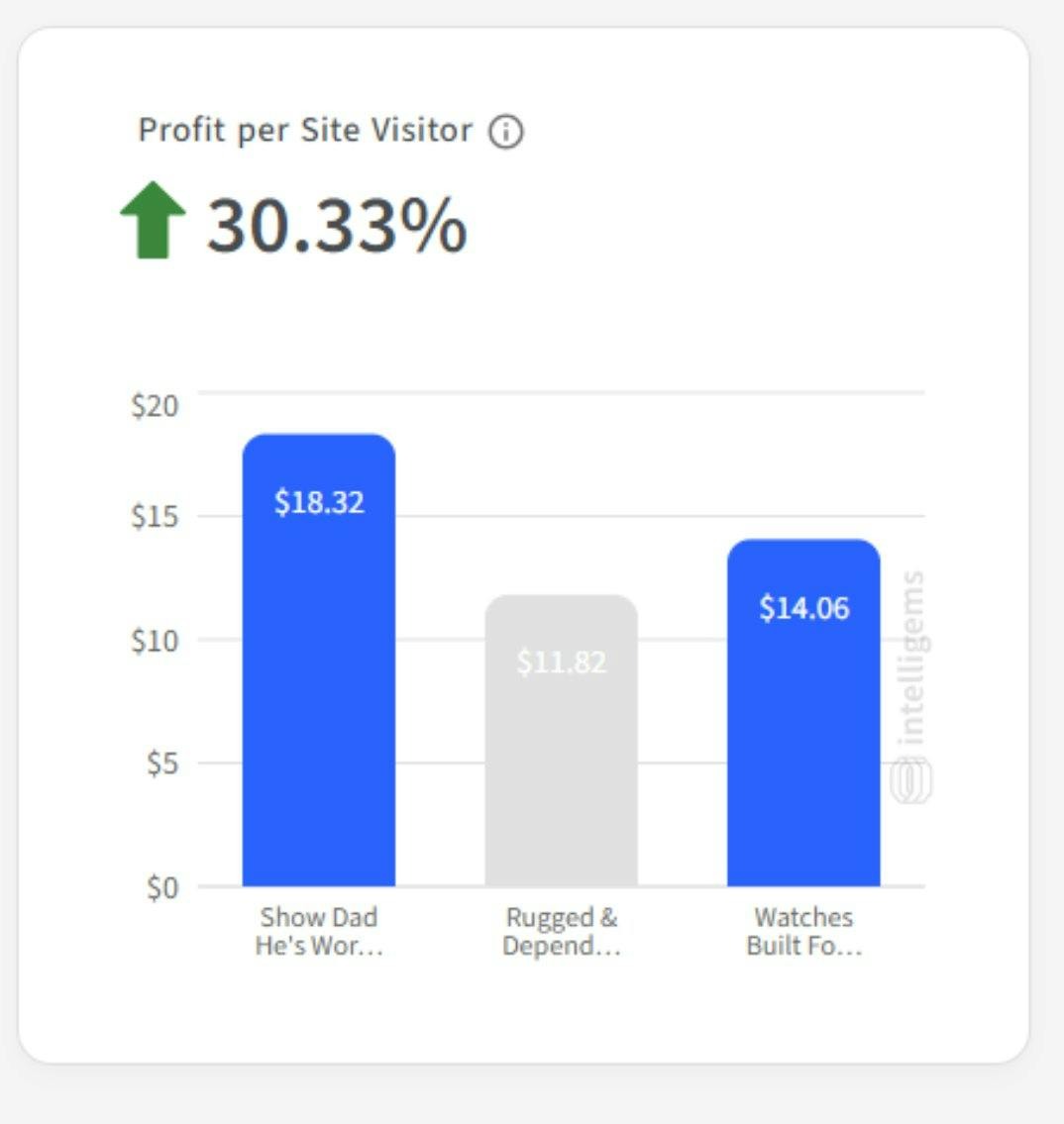
AOV increased by 35%
LTV increased by 33%
Overall revenue increased by 25%
“We doubled our Facebook spend at a better ROAS,” said VP of Marketing Nate Lagos.
Key takeaways:
Top and bottom line grew fast
CAC increased slightly, but AOV and LTV more than compensated
Heavy discounting was no longer necessary because value was clearly communicated
Psychology for the win 🥹
The One Ad That Did the Heavy Lifting
The winning message?
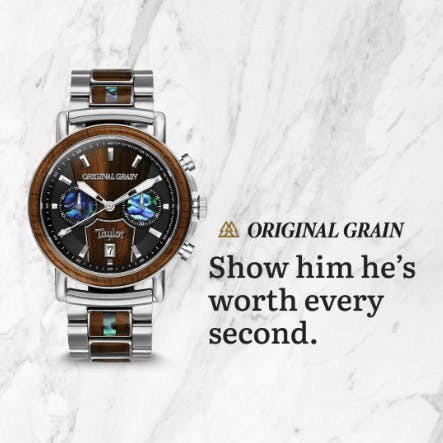
This headline was written in May of 2023.
It’s still the top performer.
As Nate later shared:
“Despite our best efforts, we haven’t been able to beat it. When marketing is rooted in deep psychological understanding, it doesn’t need to change much year over year.”
How to Know Which Ad to Run (and When)
Advertising has evolved.
We’ve moved from:
The Broadcast Era (one-way messaging)
To the Engagement Era
To the Content Era
And now we’re firmly in the Participation Era, where customers want to co-create, react, and see themselves in the brand.
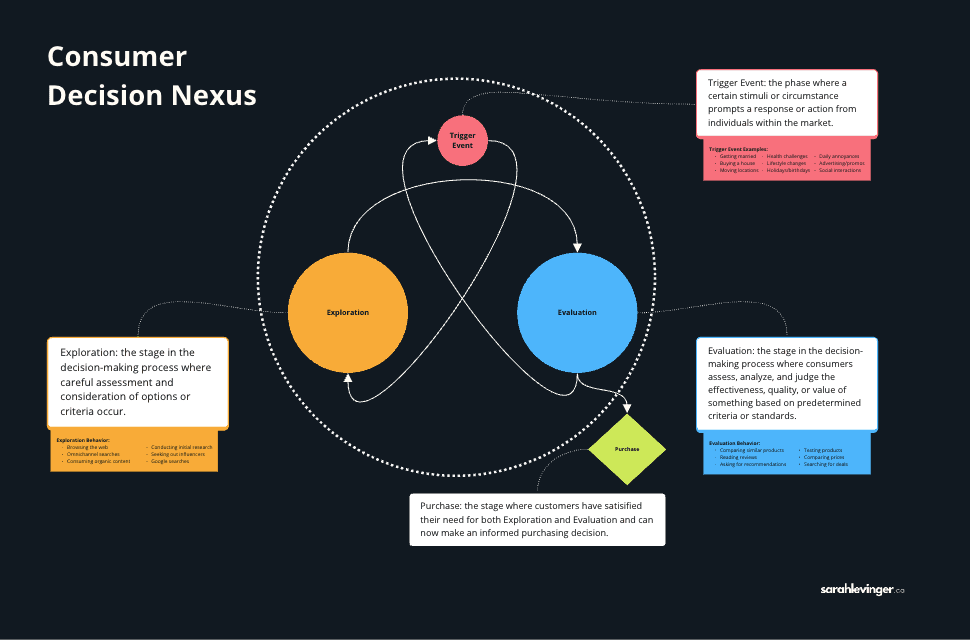
To navigate this, I use a framework called the Consumer Decision Nexus.
It aligns ad strategy with how consumers actually move through decisions.
The Brain-Driven Advertising Framework
1. Trigger Event
Identify Catalyst Moments
Trigger Events spark the journey:
Life transitions
Seasonal changes
Pain points
Best ads here:
Life Event Ads
Seasonal Ads
Pain Point Ads
Reminder Ads
Thought Leadership Content
Run year-round to build mental availability using the Mere Exposure Effect.
2. Exploration
Educate and Relate
Customers explore options.
Best ads here:
Product Tutorials
“Us vs Them” Ads
“In Their Words” (reviews/testimonials)
FAQ Ads
Use Cognitive Fluency:
Simple language
Clear visuals
Repetition
Clear beats clever. Every time.
3. Evaluation
Facilitate Transparent Comparison
Customers are engaged, but not loyal yet.
Best ads here:
Large-scale social proof
Case studies
“As Seen On”
Value and pricing breakdowns
Risk-free messaging
Use Distinction Bias ethically by highlighting real differentiators.
Run year-round.
4. Purchase
Reduce Friction, Confirm Identity
Discounts help, but shouldn’t be the default.
Best ads here:
Limited Quantity (scarcity)
Behavior Reminders
“Complete the Set”
Tap-to-Buy experiences
Loyalty / Club Ads
Leverage the Zeigarnik Effect to help customers complete what they started.
Run these year-round too.
The Real Takeaway
Running a wide range of purpose-built, psychologically primed ads—across Trigger Event, Exploration, Evaluation, and Purchase phases—is how you pre-optimize performance.
This is exactly the type of execution problem TetherOS is built to solve. TetherOS is a structured system that turns psychological insight into repeatable testing, iteration, and scalable creative… so wins like this aren’t accidental, rare, or fragile.
Subscribe to our newsletter and stay 3 steps ahead of the competition
Learn the psychology of marketing + get weekly consumer trends (that are making real money) delivered right to your inbox every Thursday.
"I tested one trend Sarah posted...it spent $30K so far at a 2X ROAS." - A.E.

The proven system behind high performing ad teams. Join today.